
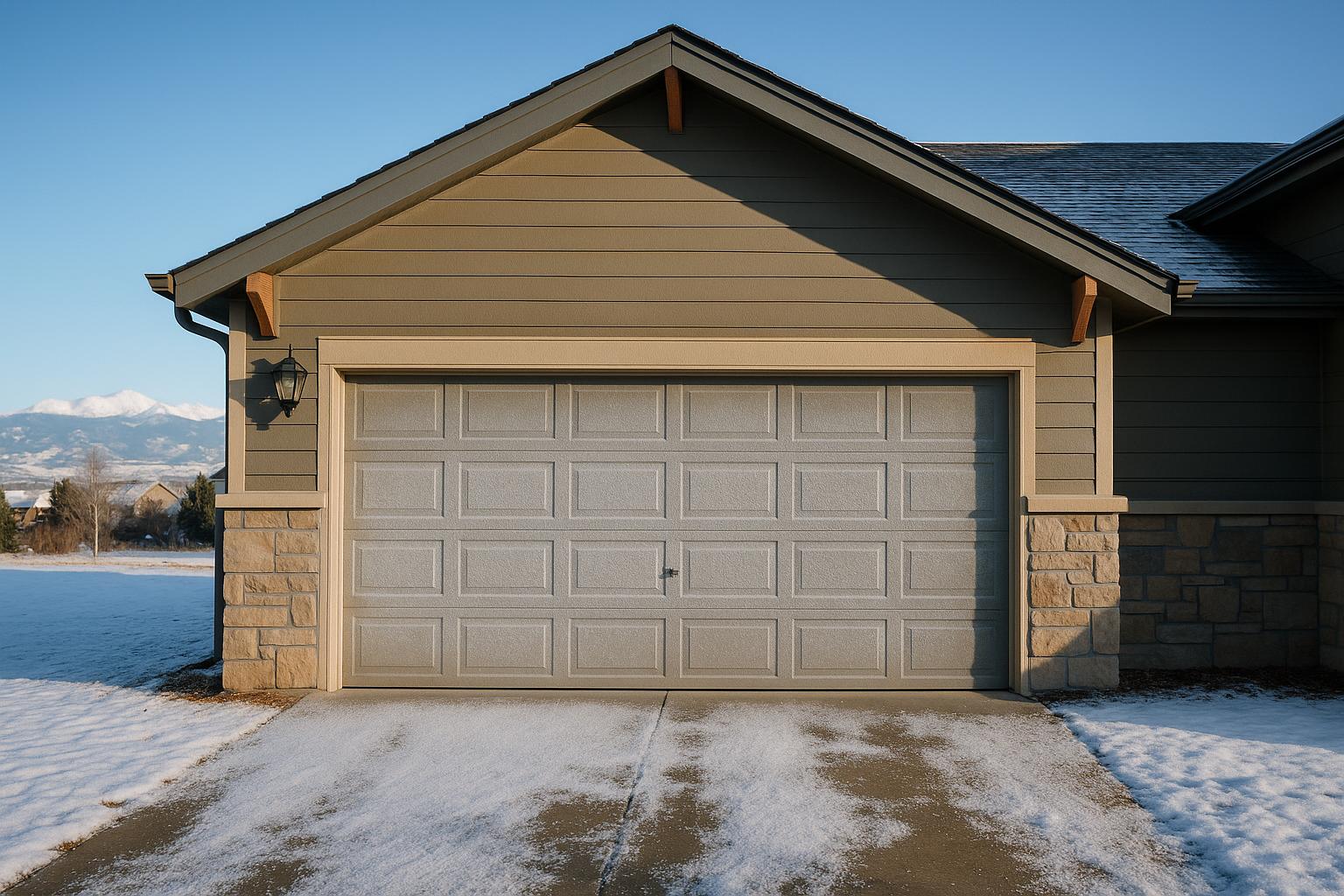
Winter Is Hard on Garage Doors in Colorado
If you've lived in Longmont for even one winter, you know how quickly temperatures can drop. One day it's 55 degrees and sunny, and the next morning you're scraping ice off your windshield in single-digit cold. What most homeowners don't realize is that those temperature swings are doing a number on your garage door.
Your garage door is the largest moving part of your home, and every component — from the springs to the opener to the weatherstripping along the bottom — reacts to cold weather. Understanding how freezing temperatures affect your garage door can help you avoid breakdowns on the worst possible mornings.
Garage Door Springs Get Brittle in the Cold
This is the number one cold-weather garage door issue we see in Longmont and the surrounding Front Range communities. Garage door springs are made of steel, and steel contracts when it gets cold. That contraction makes the metal more brittle and more prone to snapping.
If your springs are already several years old and nearing the end of their lifespan, a sudden cold snap can be the final straw. We get more calls for broken springs between November and March than any other time of year.
What you can do
- Listen for changes. If your garage door sounds louder than usual or seems to struggle when opening, your springs may be under extra stress.
- Don't ignore a slow door. A garage door that opens more slowly in winter isn't just an annoyance — it's a warning sign that the springs are working harder than they should.
- Schedule a maintenance check before winter. A professional can assess the remaining life of your springs and replace them proactively, so you're not stuck with a door that won't open on a freezing morning.
Your Garage Door Opener Works Harder When It's Cold
Garage door openers rely on a motor and a set of gears to lift and lower the door. When temperatures drop, the lubricant inside the opener thickens, the metal parts contract slightly, and the motor has to work harder to move the door. If your opener is already aging, this extra strain can burn out the motor or strip the gears.
You might notice that your opener hesitates before engaging, makes grinding noises, or fails to fully open the door. These are all signs that the cold is pushing your opener to its limits.
What you can do
- Use a garage-rated lubricant. Apply a silicone-based lubricant to the opener's chain or screw drive. Avoid WD-40 — it's a solvent, not a long-term lubricant, and it won't hold up in freezing conditions.
- Check the force settings. If your opener is struggling, you may need to slightly adjust the force settings. However, be careful — if you're not sure what you're doing, it's better to call a professional than to over-adjust and create a safety issue.
- Consider upgrading an old opener. If your opener is more than 10-12 years old and already showing signs of strain, replacing it before it fails completely can save you from an emergency repair bill.
Weatherstripping Cracks and Shrinks
The rubber weatherstripping along the bottom and sides of your garage door is designed to keep out cold air, moisture, snow, and pests. But rubber hardens and cracks over time, and cold weather accelerates the process. Once the seal is compromised, you'll notice cold drafts in your garage, higher energy bills, and possibly water or snow getting inside.
In Longmont, where we regularly see freeze-thaw cycles throughout the winter, damaged weatherstripping can also allow water to seep under the door and freeze overnight. That ice buildup can actually freeze your door to the garage floor, making it impossible to open without risking damage to the door or opener.
What you can do
- Inspect the seal visually. Look for cracks, gaps, or sections where the rubber has pulled away from the door. If daylight is visible under a closed door, the seal needs replacing.
- Replace the bottom seal. This is one of the more affordable garage door repairs and makes a noticeable difference in keeping your garage warmer and drier.
- Clear ice buildup carefully. If your door freezes to the floor, don't just hit the opener button and hope for the best. Use a flat shovel or a heat source to carefully melt the ice before attempting to open the door. Forcing it can snap cables or damage panels.
Metal Tracks and Rollers Contract
The metal tracks that guide your garage door can contract slightly in extreme cold. This can cause the door to bind, stick, or move unevenly. Rollers — especially older steel rollers without bearings — can also become stiff and noisy.
What you can do
- Lubricate the tracks and rollers. A light application of silicone-based lubricant on the rollers and hinges helps keep everything moving smoothly. Don't lubricate the inside of the tracks themselves — that can actually cause the door to slip.
- Upgrade to nylon rollers. Nylon rollers are quieter, require less maintenance, and handle temperature changes better than bare steel rollers. It's a relatively inexpensive upgrade that makes a real difference.
Panels Can Warp or Crack
If your garage door is made of wood, cold and moisture can cause the panels to warp, swell, or crack. Even steel and aluminum doors aren't completely immune — repeated freeze-thaw cycles can stress panel joints and cause cosmetic or structural issues over time.
Wooden garage doors in particular need regular sealing and painting to protect them from Colorado's dry cold and occasional heavy snow. If the finish is peeling or faded, the wood underneath is vulnerable.
What you can do
- Inspect your panels each fall. Look for cracks, warping, peeling paint, or rust spots.
- Reseal or repaint wooden doors before winter arrives to protect against moisture damage.
- Replace damaged panels promptly. A single cracked or warped panel compromises the insulation and structural integrity of the entire door.
A Pre-Winter Checkup Prevents Emergency Calls
The best way to avoid a cold-weather garage door emergency is to be proactive. A professional maintenance visit in the fall gives a technician the chance to inspect your springs, test your opener, lubricate moving parts, check the balance of the door, and replace any worn-out components before they fail.
At Longmont Garage Door, we see the same preventable problems every winter. Homeowners in Longmont, Boulder, Loveland, and the surrounding communities call us when their door won't open on a 10-degree morning — and in most cases, the issue could have been caught weeks earlier with a simple inspection.
We're not here to sell you parts you don't need. We'll tell you honestly what's worn, what's fine, and what can wait. If something needs fixing, we'll explain why and give you a clear price before we start.
Don't Wait for a Breakdown
If your garage door has been making unusual noises, moving slowly, or showing any of the signs we've described, don't wait for the coldest day of the year to find out something is wrong. Give us a call or schedule a maintenance visit. We'll make sure your garage door is ready for whatever Colorado's winter throws at it.