
Your Garage Door Springs Are Doing More Work Than You Think
Every time you open and close your garage door, the springs are doing the heavy lifting — literally. A standard two-car garage door can weigh between 150 and 250 pounds, and the springs are responsible for counterbalancing all of that weight. Your garage door opener assists with the motion, but without properly functioning springs, it can't do its job.
Most homeowners in Longmont don't think about their garage door springs until something goes wrong. And when a spring breaks, it's not subtle — you'll hear a loud bang, and your door will suddenly feel impossibly heavy or refuse to open at all. The good news is that spring failure doesn't have to catch you off guard. Understanding the lifespan of your springs and recognizing the early warning signs can save you from an inconvenient (and potentially dangerous) situation.
How Long Do Garage Door Springs Last?
The lifespan of a garage door spring is measured in cycles. One cycle equals one full open-and-close of the door. Most standard torsion springs are rated for about 10,000 cycles, while high-cycle springs can be rated for 25,000 or even 50,000 cycles.
So how does that translate to years? It depends on how often you use your garage door:
- 2 cycles per day (once out, once in): A standard spring lasts roughly 13-14 years.
- 4 cycles per day (common for families): A standard spring lasts roughly 6-7 years.
- 6-8 cycles per day (heavy use or multiple drivers): A standard spring may only last 3-4 years.
If your household is like many in Longmont — with multiple family members coming and going, kids heading to school, and regular trips to the grocery store — your springs are getting more of a workout than you might realize.
Torsion Springs vs. Extension Springs
There are two main types of garage door springs, and each has different characteristics when it comes to replacement:
Torsion Springs
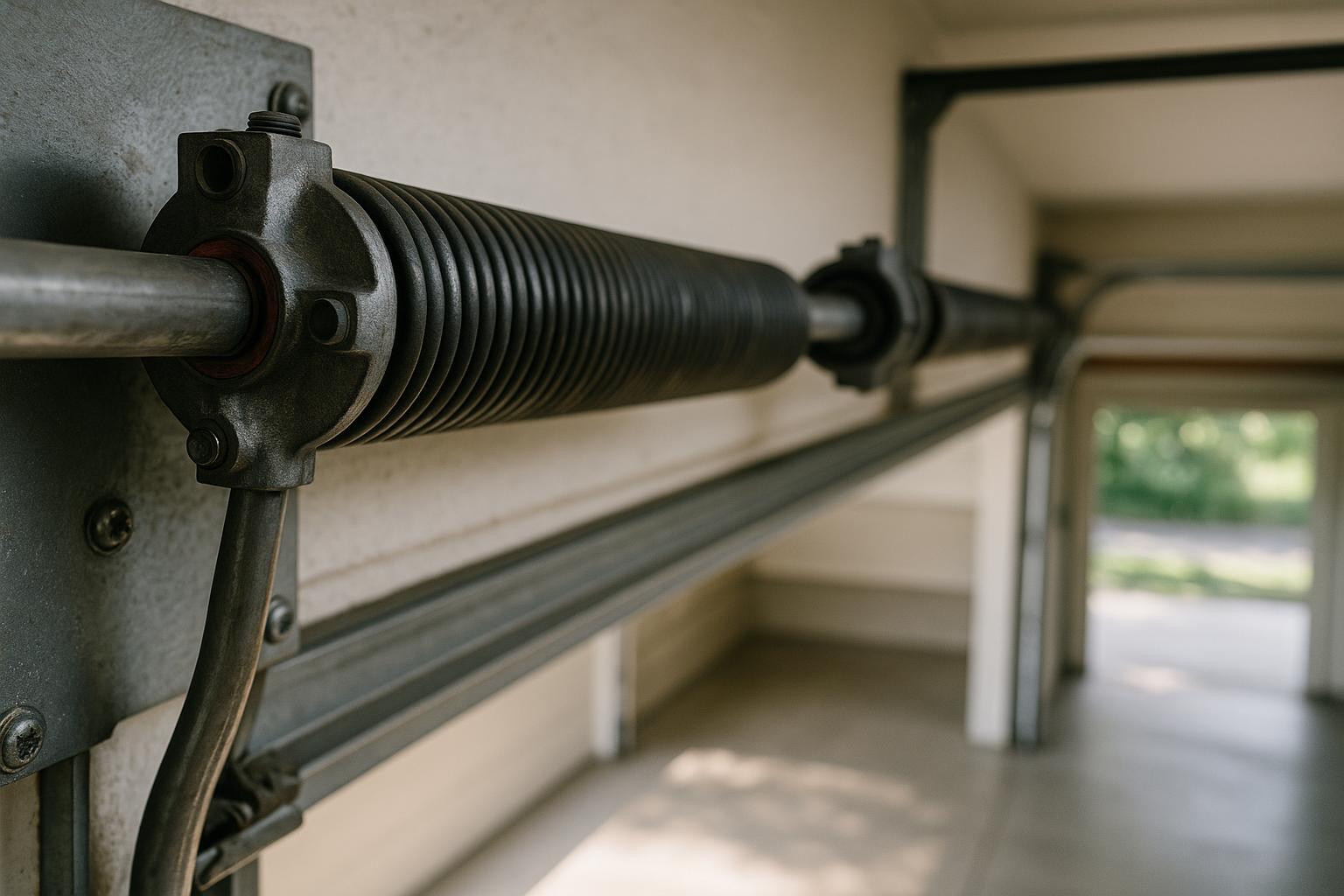
Torsion springs are mounted on a metal shaft above the garage door opening. They twist to store energy and are the more common type found on modern garage doors. Torsion springs tend to last longer, operate more smoothly, and are generally considered safer. Most homes built or updated in the Longmont area in the last 20 years use torsion springs.
Extension Springs
Extension springs run along the horizontal tracks on either side of the door. They stretch and contract to help lift the door. Extension springs are more common on older or lighter doors, and they tend to wear out faster than torsion springs. They also pose a greater safety risk when they break because they can snap and fly across the garage if they don't have safety cables installed.
Regardless of which type you have, both will eventually wear out and need replacement.
Warning Signs Your Springs Are Wearing Out
You don't have to wait for a spring to snap to know it's time for a replacement. Here are the signs Longmont homeowners should watch for:
- The door feels heavier than usual. If you disconnect the opener and try to lift the door manually, it should move relatively easily. If it feels extremely heavy or won't stay open on its own, the springs are losing tension.
- The door opens unevenly. If one side of the door rises faster than the other, one spring may be weaker or close to failing. This is especially common with extension spring systems.
- Visible gaps in the spring coils. A healthy torsion spring has tightly wound coils. If you can see gaps or separation between the coils, the spring is stretched out and nearing the end of its life.
- The opener is straining. If your garage door opener sounds louder than usual or seems to struggle, it may be compensating for weak springs. This puts extra stress on the opener motor and can shorten its lifespan too.
- The door slams shut quickly. When springs lose their ability to control the door's weight, the door may close faster than normal. This is a safety hazard, especially if you have children or pets.
- Rust on the springs. Colorado's dry climate is easier on metal than coastal areas, but moisture from snow, ice, and temperature swings can still cause rust. Rust increases friction on the coils and shortens spring life.
Can You Replace Garage Door Springs Yourself?
This is one of the most common questions we get, and our answer is always the same: we strongly recommend against DIY spring replacement.
Garage door springs are under an enormous amount of tension. Torsion springs, in particular, store enough energy to cause serious injury or even death if handled improperly. Professional technicians use specialized tools and have the training to safely release and reset spring tension. It's one of the few home repairs where the risk genuinely isn't worth the savings.
If you suspect your springs need attention, calling a professional is the safest and most efficient route. At Longmont Garage Door, we handle spring replacements regularly and can typically complete the job in under an hour.
Should You Replace Both Springs at the Same Time?
If your garage door has two torsion springs (which is common on heavier doors), we almost always recommend replacing both at the same time — even if only one has broken. Here's why:
- Both springs were installed at the same time, so they've endured the same number of cycles. If one has failed, the other is likely close behind.
- Replacing both at once saves you the cost of a second service call in the near future.
- Mismatched springs (one new, one old) can cause the door to operate unevenly, which puts stress on the tracks, cables, and opener.
How to Extend the Life of Your Garage Door Springs
While springs will eventually wear out no matter what, there are a few things you can do to get the most life out of them:
- Lubricate your springs regularly. Apply a silicone-based or white lithium garage door lubricant to the springs two to three times a year. This reduces friction and helps prevent rust. It takes about 30 seconds and makes a noticeable difference.
- Schedule annual maintenance. A professional tune-up includes checking spring tension, inspecting cables and hardware, lubricating moving parts, and testing the balance of the door. Think of it like an oil change for your garage door.
- Don't ignore small problems. Strange noises, slow operation, or a slightly crooked door are all signs that something is off. Addressing issues early can prevent a spring from failing prematurely.
- Consider high-cycle springs. If you're replacing springs and you use your garage door frequently, investing in high-cycle springs costs a bit more upfront but can double or triple the lifespan.
When to Call a Professional in Longmont
If your garage door springs are showing any of the warning signs listed above — or if a spring has already broken — don't try to force the door open or use the opener. This can cause further damage to the door, tracks, or opener motor.
Give us a call at Longmont Garage Door. We serve homeowners throughout Longmont, Boulder, Loveland, Berthoud, Firestone, and Frederick with honest, straightforward garage door repair and spring replacement. We'll inspect your springs, explain exactly what's going on, and get your door working safely again — usually the same day.
Your garage door springs work hard every single day. Knowing when they need attention is one of the simplest ways to avoid an unexpected breakdown and keep your home running smoothly.