
When Your Garage Door Jumps the Tracks, Don't Ignore It
You press the button to open your garage door and something looks — and sounds — wrong. The door moves unevenly, scrapes against the frame, or stops partway up. You look closer and notice one or both sides of the door have slipped out of the metal tracks that guide it up and down.
A garage door off track is one of the more common — and more dangerous — problems Longmont homeowners deal with. It can happen suddenly after an impact, or it can develop gradually as hardware wears out over time. Either way, it's not something you should try to muscle back into place on your own.
Here's what causes a garage door to come off its tracks, the warning signs to watch for, and what to do when it happens.
What Causes a Garage Door to Come Off Track?
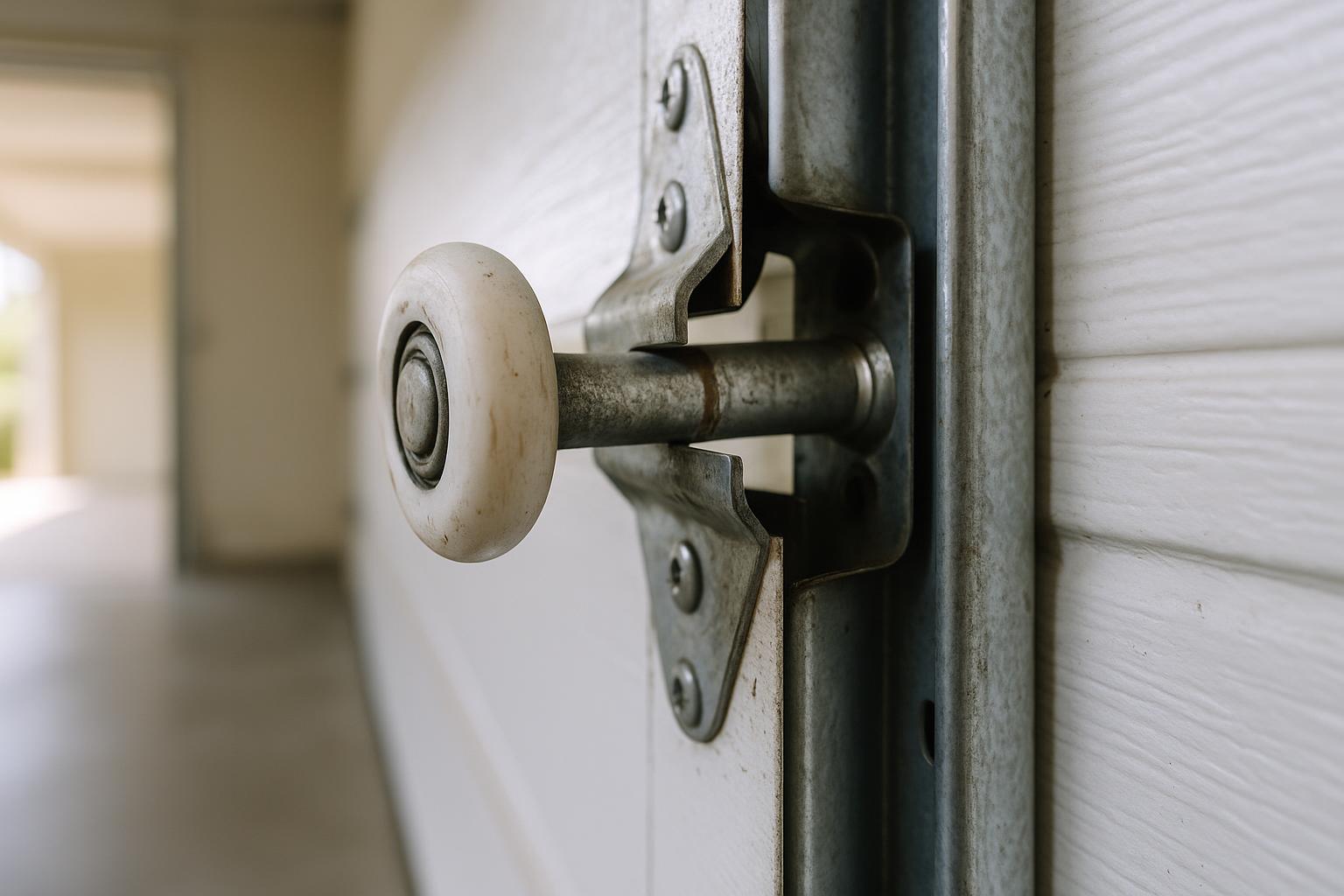
Garage doors rely on a pair of vertical and curved metal tracks on either side of the opening. Rollers attached to the door panels ride inside these tracks, keeping everything aligned as the door moves. When something disrupts that alignment, the door can partially or fully derail.
Impact or Collision
This is the most common cause. Backing a car into a partially closed garage door — even at low speed — can bend the tracks or knock the bottom panel out of alignment. It doesn't take much force to push a roller out of its track, especially near the bottom where the door curves from vertical to horizontal.
Worn or Broken Rollers
Garage door rollers wear out over time. Nylon rollers can crack, and steel rollers can lose their bearings. When a roller breaks or seizes up, it can pop out of the track entirely, causing the door to shift and bind.
Bent or Misaligned Tracks
Tracks can become bent from an impact, from loose mounting brackets, or simply from years of use. Even a small bend can cause the rollers to catch, skip, or jump out. If the vertical tracks aren't perfectly plumb or the horizontal tracks aren't level, the problem compounds over time.
Broken Lift Cables
When a lift cable snaps on one side, the door loses balanced support. The side without cable tension can drop or shift, pulling rollers out of the track on one or both sides. This often happens in combination with a spring failure.
Loose or Missing Hardware
The brackets that hold the tracks to the wall and ceiling need to be tight. Vibration from daily use can loosen bolts and screws over time. If a bracket shifts even slightly, the track gap can widen enough for a roller to escape.
Warning Signs Your Door Is About to Come Off Track
A garage door rarely jumps its tracks without some warning. If you notice any of these signs, it's worth having a professional take a look before the problem gets worse:
- The door moves unevenly — one side rises faster than the other, or the door appears crooked when partially open.
- You hear grinding or scraping sounds — metal-on-metal noise usually means a roller is dragging against the track edge instead of rolling smoothly inside it.
- Visible gaps between rollers and tracks — if you can see daylight between the roller and the track channel, something is misaligned.
- The door hesitates or sticks — the door pauses at a certain point during travel, requiring extra force from the opener to push through.
- A roller is visibly cracked or wobbly — inspect your rollers from inside the garage. If any look damaged or spin loosely on their stems, they're candidates for failure.
What to Do If Your Garage Door Is Off Track
If your garage door has come off its tracks — partially or completely — here's the right way to handle it:
Step 1: Stop Using the Door Immediately
Don't press the opener button again. Don't try to manually push the door up or pull it down. An off-track door is under tremendous tension from the springs and the weight of the panels. Forcing it to move can cause the door to fall, bend panels beyond repair, or cause serious injury.
Step 2: Disconnect the Opener
If it's safe to reach, pull the emergency release cord (the red handle hanging from the opener rail) to disconnect the door from the automatic opener. This prevents the opener from activating accidentally and making the situation worse.
Step 3: Secure the Area
Keep children, pets, and vehicles away from the door. If the door is partially open and unstable, don't park underneath it. A garage door can weigh anywhere from 130 to over 400 pounds depending on the size and material — you don't want it coming down unexpectedly.
Step 4: Call a Professional
Getting a garage door back on track requires specialized tools, knowledge of spring tension, and experience with track alignment. It's not a YouTube DIY project. The risks — from the door falling to springs releasing unexpectedly — are real.
At Longmont Garage Door, we handle off-track repairs regularly. We'll assess the damage, determine whether the tracks need to be straightened or replaced, swap out any broken rollers, and make sure everything is properly aligned before testing the door.
Can You Prevent Your Garage Door From Going Off Track?
You can't prevent every accident, but regular maintenance goes a long way toward keeping your door on track — literally. Here are a few things Longmont homeowners can do:
- Schedule annual maintenance. A professional tune-up includes tightening hardware, inspecting rollers and tracks, and checking cable condition. Small problems get caught before they become big ones.
- Visually inspect your tracks monthly. Look for bends, gaps, or debris in the track channel. Clear out any dirt, leaves, or small objects that could obstruct the rollers.
- Replace worn rollers proactively. Most rollers last 10,000 to 15,000 cycles. If yours are getting old or showing wear, replacing them before they fail is far cheaper than repairing an off-track door.
- Be careful when backing out. It sounds obvious, but a surprising number of off-track calls start with a bumper meeting a garage door that wasn't fully open yet. Wait until the door is completely up before pulling out.
What About the Cost?
The cost of an off-track repair depends on the extent of the damage. If the tracks are intact and just need realignment with a roller replacement, it's a relatively straightforward fix. If the tracks are bent or panels are damaged, the repair becomes more involved.
Either way, addressing the problem quickly usually saves money. A door that's forced to operate while off track can damage panels, strip the opener's gears, and put dangerous stress on the springs and cables — turning a moderate repair into a much more expensive one.
We're Here When You Need Us
If your garage door is off track, stuck at an angle, or making sounds that tell you something isn't right, give us a call. At Longmont Garage Door, we serve homeowners across Longmont, Boulder, Loveland, Berthoud, Firestone, and Frederick with honest, reliable repair work. We'll show up on time, explain exactly what's going on, and get your door moving safely again.
Don't wait for a partially derailed door to become a fully derailed one. The sooner it's fixed, the safer — and cheaper — the repair will be.