
That Frustrating Reverse: What's Really Happening
You press the button on your garage door remote. The door starts coming down smoothly. Then, about six inches from the floor, it suddenly stops and goes right back up. You try again. Same thing. Maybe you try holding the wall button, and it works — but only while you physically hold it down.
This is one of the most common garage door problems we see from homeowners in Longmont, and it's more than just annoying. A door that won't fully close leaves your garage exposed to weather, pests, and security risks. The good news is that the cause is usually straightforward, and in many cases, the fix doesn't require replacing the entire system.
Let's walk through the most likely reasons your garage door reverses before reaching the floor and what you can do about each one.
1. Misaligned Safety Sensors
This is the number one cause of a garage door that reverses before closing, and it's the first thing we check on every service call.
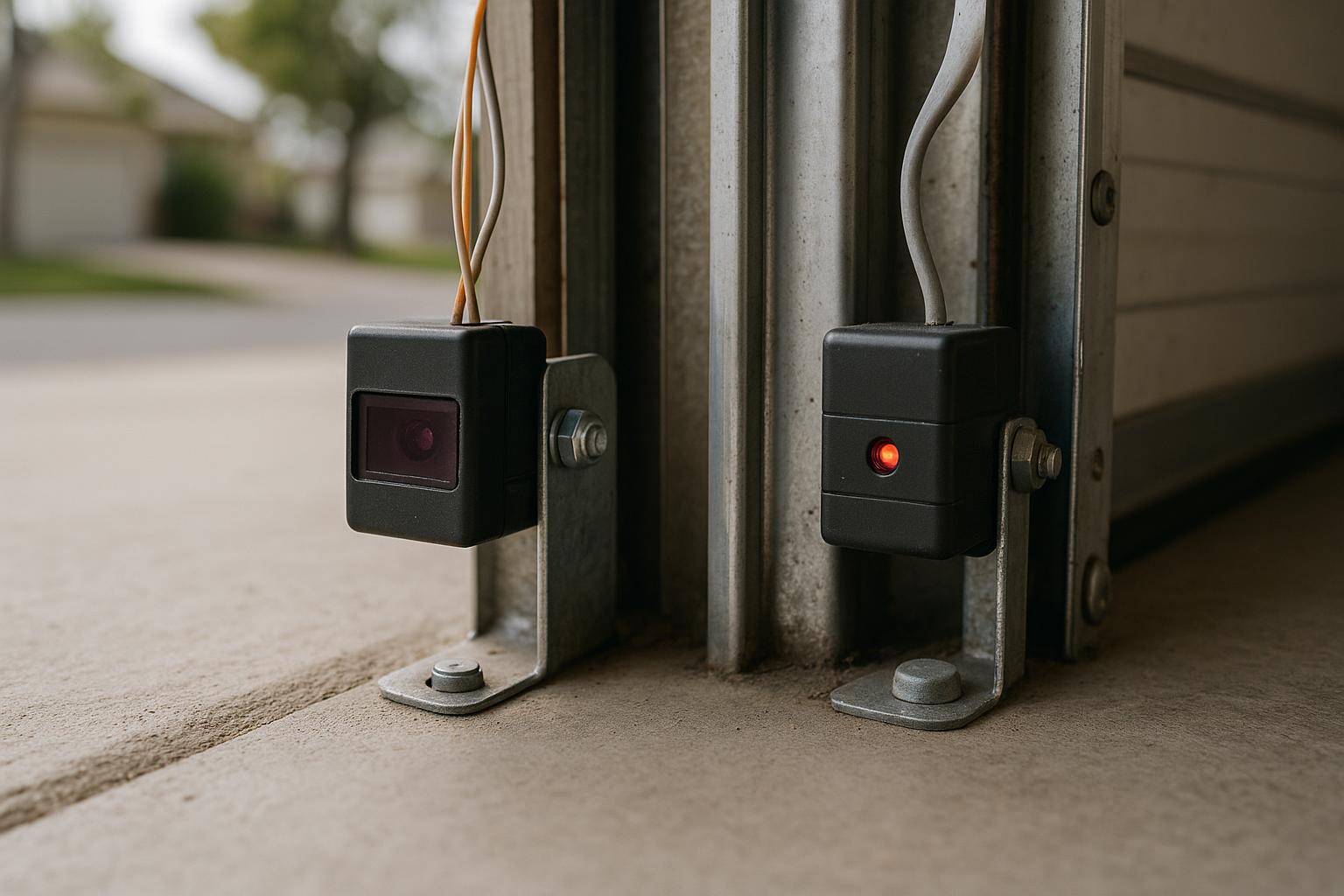
Since 1993, all garage door openers sold in the United States are required to have photo-eye safety sensors. These are the two small devices mounted near the bottom of your garage door tracks, about six inches off the ground. One sends an infrared beam to the other. If anything breaks that beam — a bike, a trash can, a child, or even a spiderweb — the door is designed to reverse immediately.
When these sensors get bumped, shifted, or knocked out of alignment, the opener thinks there's an obstruction even when there isn't one. Here's what to check:
- Look at the indicator lights. Most sensors have small LED lights. If one is blinking instead of staying solid, that sensor is likely out of alignment.
- Check for obstructions. Remove anything near the sensors, including cobwebs, dirt, or leaves.
- Clean the lenses. A soft cloth and some glass cleaner can remove dust or grime that blocks the beam.
- Gently adjust the sensor. If a sensor has been bumped, you can usually loosen the wing nut or bracket, realign it until the light goes solid, and retighten it.
In Longmont, we see sensor issues spike in the fall and winter. Leaves blow into garages, condensation fogs the lenses, and temperature swings can cause the metal brackets to shift slightly. It's a simple fix, but it accounts for a huge percentage of our repair calls.
2. The Close-Limit Switch Needs Adjusting
Your garage door opener has limit switches that tell the motor how far the door should travel when opening and closing. If the close-limit setting is off, the opener may think the door has hit something solid — like the floor — before it actually gets there. The safety mechanism kicks in and reverses the door.
This is especially common after a new opener installation or if someone has recently adjusted the opener settings. On most openers, the limit adjustment is a small screw or dial on the back or side of the motor unit. Turning it slightly increases the travel distance, allowing the door to reach the floor before the motor stops.
If you're not comfortable making this adjustment yourself, it's a quick fix for a technician. We handle these adjustments regularly and can usually resolve the issue in under 30 minutes.
3. Worn or Damaged Rollers and Tracks
Sometimes the door reverses because it's genuinely encountering resistance — just not from an object on the ground. Worn rollers, bent tracks, or debris in the track channel can create enough friction that the opener's force sensor interprets it as an obstruction.
Signs that your tracks or rollers might be the problem include:
- Grinding or scraping noises when the door moves
- Visible damage or bends in the metal tracks
- Rollers that look cracked, chipped, or don't spin freely
- The door moves unevenly or seems to stick at certain points
Nylon rollers typically last 10,000 to 15,000 cycles, while steel rollers may wear out sooner and become much noisier as they age. If your garage door is more than 8 to 10 years old and you've never replaced the rollers, there's a good chance they're contributing to the problem.
4. The Force Setting Is Too Low
Garage door openers have adjustable force settings that control how much power the motor uses to open and close the door. If the closing force is set too low, the opener may not have enough power to push the door all the way down, especially as components age and create more friction.
You can usually adjust the force with a small dial or screw on the opener unit, similar to the limit switches. However, be cautious here. Setting the force too high can create a safety hazard — the door needs to be able to reverse if it contacts a person or object. This is one adjustment where professional calibration makes a real difference.
5. Broken or Worn Garage Door Springs
Your garage door springs do the heavy lifting — literally. They counterbalance the weight of the door so the opener only needs to provide a small amount of force to move it. When springs weaken or break, the opener has to work much harder. This added strain can trigger the safety reverse.
If your door feels unusually heavy when you try to lift it manually, or if you notice a gap in one of the torsion springs above the door, spring replacement is likely needed. We strongly recommend leaving spring work to professionals. Garage door springs are under extreme tension and can cause serious injury if handled incorrectly.
When to Call a Professional
Some of these fixes — cleaning sensors, removing obstructions, checking for obvious track damage — are safe for homeowners to handle. But if you've gone through the basics and your door still won't close properly, it's time to call in a technician.
Here are situations where professional help is the right call:
- The sensors appear aligned but the door still reverses
- You suspect a spring issue
- The tracks are visibly bent or damaged
- You're not sure which settings to adjust on your opener
- The problem started after a power outage or electrical event
At Longmont Garage Door, we diagnose the actual problem before recommending any repairs. We're not going to tell you that you need a new opener when a five-minute sensor adjustment will solve the issue. That's just how we operate.
Preventing Future Issues
A little preventive maintenance goes a long way toward avoiding the reversing-door headache. Here's a quick seasonal checklist:
- Test the safety sensors monthly. Place an object like a cardboard box in the door's path and try to close it. The door should reverse immediately.
- Clean the sensor lenses every few months, especially during dusty summer months and after fall leaf season here in Longmont.
- Lubricate the rollers, hinges, and springs with a silicone-based garage door lubricant twice a year.
- Visually inspect the tracks for dents, debris, or misalignment.
- Schedule annual professional maintenance to catch worn parts before they cause bigger problems.
A garage door that reverses before closing is trying to tell you something. In most cases, the fix is simple and affordable. The key is figuring out which component is actually causing the issue rather than guessing and replacing parts you don't need.
If your garage door has been giving you trouble, give us a call. We serve Longmont and the surrounding communities — including Boulder, Loveland, Berthoud, Firestone, and Frederick — and we're happy to take a look.